
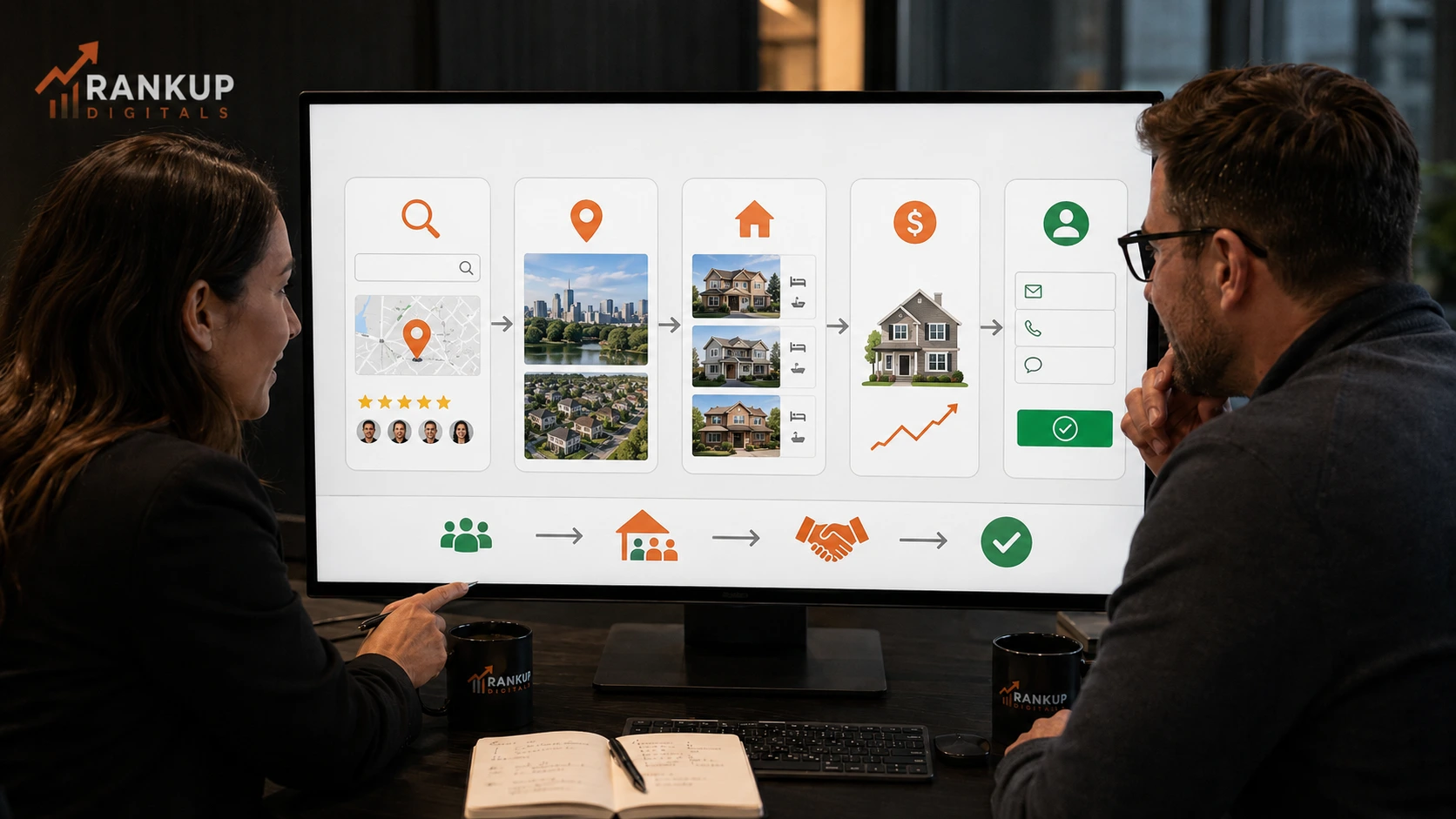
A real estate agent reached out asking why his website was not producing leads. The site had listings, photos, contact forms, and a basic blog, looking active from the outside even though no leads were coming in.
When we checked how his buyers and sellers were searching, property addresses turned out to be a tiny fraction of what people typed into Google. Most searches were about neighborhoods, school zones, price trends, recent sales, agent reputation, and whether someone seemed to know the local area well enough.
His site had listings, and that was about it. The earlier searches that lead people toward an agent had nowhere to land.
This is a common gap in real estate SEO. Many agents think SEO means cramming property listings with keywords and hoping Google ranks them. Listings do matter, but Zillow, Realtor.com, Trulia and the other major portals already dominate most listing-style searches before a smaller agent gets a look in.
Good real estate SEO works on a different problem. It helps the right buyer or seller find the right agent before they have committed to someone else. A website needs more than IDX feeds and listing galleries for that. Neighborhood content, a maintained Google Business Profile, ongoing reviews, listing pages with local context, and a few local-focused service area pages all play a part.
Every page should produce qualified leads from people who already care about the area. Traffic on its own does not pay any bills.
Real Estate SEO Starts Before the Listing
Most agents focus on ranking their listings first, and there is logic to it. Listings feel like the product. Someone sees a house, likes it, contacts the agent. SEO usually starts well before that moment though.
Consider what people search before they call any agent. A buyer might Google “best neighborhoods near Austin for families” weeks ahead of opening a listing. Sellers search things like “how much is my home worth in Tampa” months before speaking to anyone. Relocation searches form their own category, with people pulling up school districts, commute times, property taxes, and market trends long before any specific house catches their eye.
If a website carries only property listings, the agent shows up late to the conversation. People are already deep into their decision process by then, with shortlists built and other agents bookmarked.
A few page types do most of the heavy lifting. Neighborhood pages build local credibility in a way listings never can. City pages support broader local search. Market update content wins seller trust by showing the agent is paying attention to local data. Buyer guides walk a line between being helpful and turning into a pitch. Home valuation pages catch seller intent at the moment people start considering a move. All of this rests on proper content writing behind each page.
Real estate website optimization works best when listings and local content sit alongside each other. The listing shows off the property, while the surrounding content convinces the visitor the agent understands the market.
How Buyers and Sellers Search Differently
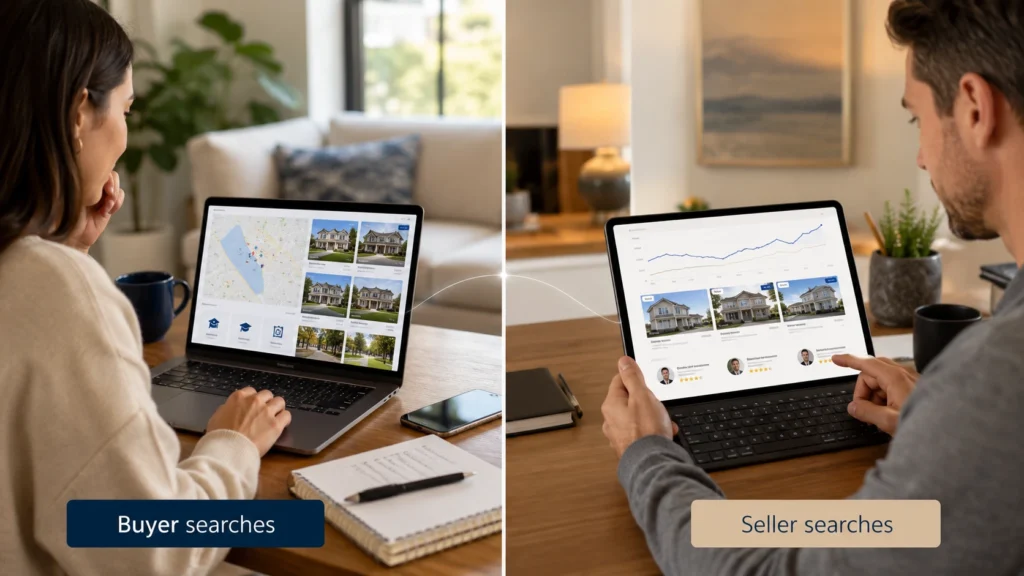
The strategy splits into two paths here. A buyer wants confidence about the area while a seller wants confidence about the agent. Those two goals shape very different search journeys.
For a buyer, searches revolve around homes near good schools, commute-friendly neighborhoods, average prices, walkable areas, or phrases like “best places to live near” some city. Sellers go another direction, wanting to know whether now is a good time to sell, what their home might be worth, how long homes are sitting on the market, and which agent in town handles their type of property best.
Treating both groups the same produces flat content. SEO for realtors works better when each page knows who it is helping. A neighborhood guide focuses on buyers, a home valuation page focuses on sellers, and a market update can serve both if it offers useful local context.
Real estate lead generation feels less random once the website is structured this way. The website gives buyers and sellers a reason to trust the agent before they reach out, rather than waiting passively for a listing click.
Local SEO Is Usually the First Fix
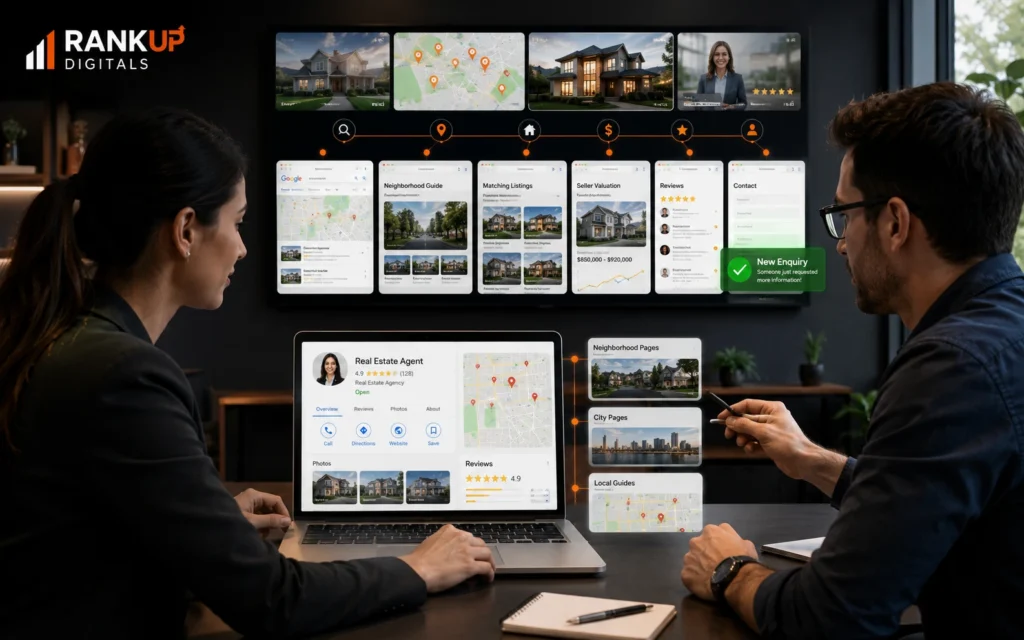
Local search visibility matters more than national traffic for most agents. Google Business Profile, reviews, local citations, NAP consistency, city pages, and neighborhood pages all connect the agent with local search intent.
A weak profile can cost leads before the website gets a chance. Someone seeing thin reviews, outdated photos, or vague business information may never click through. Google’s own guidance on local ranking factors talks about relevance, distance, and prominence. Most of that prominence comes from review depth, accurate business information across the web, and local signals coming off the website itself.
The website should back up the same local story. If the Google Business Profile lists certain cities the agent covers, the website should have pages that prove the claim with genuine neighborhood detail, buyer and seller concerns, photos from the area when possible, and clear next steps. Doorway pages built only for SEO will not hold up.
Our SEO services usually start by checking that connection between profile, website, service area pages, internal links, and whether Google can understand where the business is relevant.
Listings Help, Though They Are Not the Whole Plan
Property listings matter, no question. A website built only around them is easy to forget though. IDX integration can make a site look busy without making it useful. If every listing page looks like the same feed everyone else has, little separates that agent from a portal.
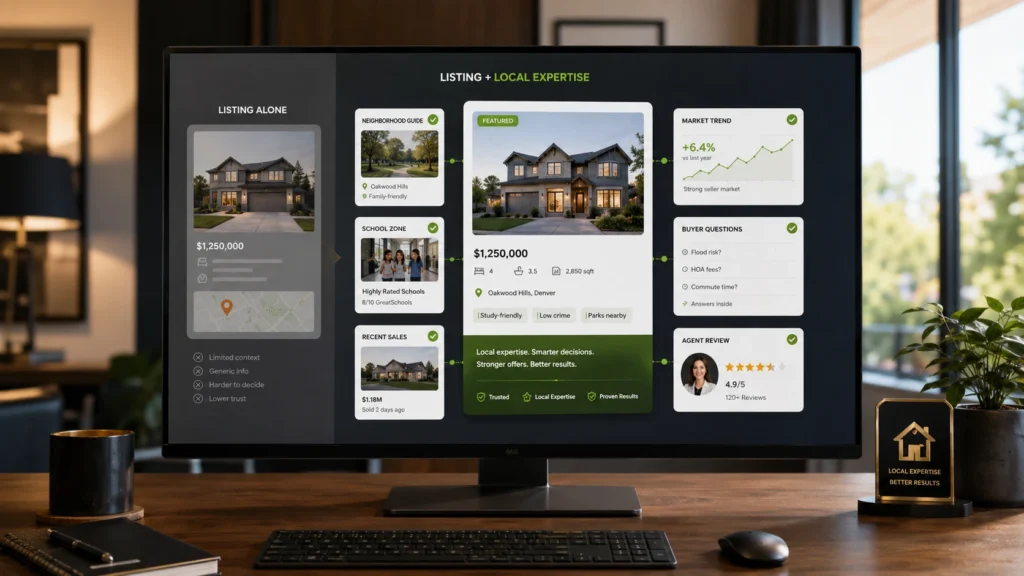
Real estate listings SEO performs better when listings are supported by genuine context. That can come from answering a few questions on each listing page, like why this neighborhood is seeing more activity, what kind of buyer usually looks at homes in this price range, whether the area is seeing multiple offers, and what a buyer should know before booking a showing.
Big portals own broad listing searches and there is no fighting that head on. Smaller agents have a path through trust around local expertise, narrower searches, and content that feels written by someone who knows the market firsthand.
Where to Focus the SEO Work First
If I were reviewing a real estate website today, blog posts would be the last thing I would count. The first question would be whether the site can turn local searches into buyer and seller enquiries. Many agent websites look professional, the photography is decent, the IDX feed loads fine, and the path from search to trust to enquiry just is not there.
Here is the simple way I would look at it:
| What to Fix | Why It Matters for Real Estate SEO |
|---|---|
| Google Business Profile | Helps agents appear for local searches and map results |
| Reviews and reputation | Gives buyers and sellers trust before they click |
| Neighborhood pages | Shows local expertise beyond basic property listings |
| Seller-focused pages | Captures valuation, selling timeline, and market intent |
| Listing page content | Adds context so listings do not feel like a copied feed |
| Internal links | Moves visitors from guides to listings, valuation pages, or contact forms |
| Website speed and mobile layout | Keeps buyers and sellers from leaving before they enquire |
That table usually exposes the problem within minutes. Most real estate websites do not need more random content; they need a cleaner path. A buyer should move from a neighborhood guide to matching listings and then to a contact form, with the seller path running parallel from market update to valuation page to call or enquiry.
Going After Every Portal Is Usually a Losing Game
Trying to outrank Zillow or Realtor.com for every property search is the wrong fight. Those platforms hold domain authority, listing databases, and search demand that most agents cannot copy on any budget. Local agents have one thing those portals usually lack though, which is deep local trust.
A portal listing shows a property. A good agent website can do much more by explaining the street, the type of buyer living there, recent price movements, seller pressure, school catchment areas, common inspection concerns, and details that only become clear after talking to someone working in that market. Realtor SEO can still compete in that gap by becoming more useful as a local source rather than outscaling a portal.
When a website proves local expertise before the visitor reaches the contact form, SEO has done more than bring traffic. It has helped the buyer or seller feel safer about taking the next step.
The Pages I Would Build First
For most agents and brokers, I would start with the pages closest to leads. The main city page comes first, then neighborhood pages, then a seller valuation page, then buyer guides for the areas that matter most. Listing pages with proper local context come last in that first wave. Blog posts can wait until those foundations are in place, after which they can support everything with market updates, home buying tips, and selling advice.
A weak website makes the SEO work much harder. A real estate site needs clean structure, fast pages, readable listings, clear calls to action, and proper on-page optimization. When that foundation is missing, our WordPress development team has to fix the website first before SEO can do its job.
A proper real estate SEO plan goes past “rank more pages.” What the agent wants is for buyers and sellers to find the right page and submit the enquiry form once they feel confident.
FAQs
Is SEO worth it for real estate agents?
It is worth it when the goal is long-term buyer and seller leads. SEO works slower than paid ads, though it helps agents build local visibility through neighborhood pages, reviews, city pages, and helpful content that keeps working for months after publishing.
How does SEO work for real estate agents?
SEO helps agents show up when buyers and sellers search for local property information, neighborhoods, home values, listings, and agents. The website, Google Business Profile, reviews, local pages, and content all work together as one system.
How long does real estate SEO take?
Most real estate SEO work needs a few months before clear movement shows up. Local fixes and Google Business Profile improvements can help sooner, while competitive organic rankings usually take longer because real estate SERPs are crowded.
Can a real estate website rank above Zillow?
It happens sometimes, especially for local, specific, and trust-based searches. Beating big portals on broad listing searches is hard, though agents can still compete on neighborhood guides, seller pages, and buyer questions where local expertise matters more than scale.
Final Thought Before You Publish Another Listing
Real estate SEO works best when the website feels like a local expert rather than another property feed. Listings are part of the work, but they cannot cover everything on their own. Buyers need context to make a decision, sellers need a reason to trust the agent, and Google looks for strong local signals when deciding which pages deserve to rank.
If a site has listings without neighborhood depth, missing seller pages, weak reviews, and no clear path to enquiry, SEO will feel slow. Fixing the local trust path first usually changes everything. Anyone wanting help reviewing where their site sits today can use our start project page as the easiest place to begin.
