

A lawyer once asked me something simple during a website review: “People are visiting the site, but why are they not calling?”
The site looked fine at first, with a clean logo, practice areas listed, and a contact form on the page. The pages felt like a brochure though. They explained what the firm did without helping a worried person decide whether to call.
SEO for lawyers often goes wrong at exactly this point. Many law firms chase rankings, publish random legal blogs, and hope clients appear. Quality enquiries usually come from a tighter system: clear practice pages, local trust signals, useful legal content, strong attorney credibility, and a contact path that does not make people think twice.
What SEO for Lawyers Should Fix
Most law firm websites have a clarity problem before they have a traffic problem.
Someone looking for a divorce lawyer, personal injury attorney, immigration lawyer, or criminal defense lawyer is rarely browsing casually. They may be stressed, rushed, or comparing two or three firms before making a call.
Good legal SEO has to answer three things fast: whether Google understands what your firm handles, whether the client can trust you quickly, and whether the visitor can contact you without friction.
Google’s SEO Starter Guide explains that SEO helps search engines understand content and helps users decide whether to visit a site. For a law firm, vague pages tend to underperform. A page called “Legal Services” tells less than a focused page for “Family Law Attorney in Dallas” or “Car Accident Lawyer in Tampa.”
The goal here is to make every important page specific, useful, and easy to understand, instead of stuffing city names everywhere.
If a firm already has a website but enquiries are weak, our SEO services usually start with these basics before adding more blog content.

Legal Clients Search With Urgency
The intent behind legal searches varies more than most people realise. A person searching “what to do after a car accident” may still be learning, while someone searching “car accident lawyer near me” is much closer to calling. Both searches matter, although they need different pages on the site.
A strong law firm website usually needs practice area pages for serious service intent, local pages where the firm genuinely serves that area, helpful blog content for early questions, attorney bio pages for trust, and a contact page that feels simple to use.
When these pages connect properly, the site feels like a path. A visitor can understand their issue, check whether the firm handles it, see who they may speak with, and request a consultation. That path brings better leads than a pile of disconnected blog posts ever will.

Practice Area Pages Usually Matter Most
If I had to fix one part of a law firm website first, I would start with practice area pages rather than the blog. Blogs help, although practice pages often carry the strongest buying intent.
A personal injury page, family law page, estate planning page, or criminal defense page should do more than say, “We help clients with legal matters.” It should explain who the service is for, what situations the firm handles, what the client should expect, and why the firm is credible enough to contact.
A useful practice page usually covers the case types handled, the city or service area, attorney experience, common client concerns, the consultation process, documents the client may need, and phone and form options for getting in touch.
Legal SEO needs care here. The American Bar Association’s Rule 7.1 warns against false or misleading communication about a lawyer’s services. The page should build trust through clarity and avoid exaggerated promises.

Local SEO Decides Who Gets Found First
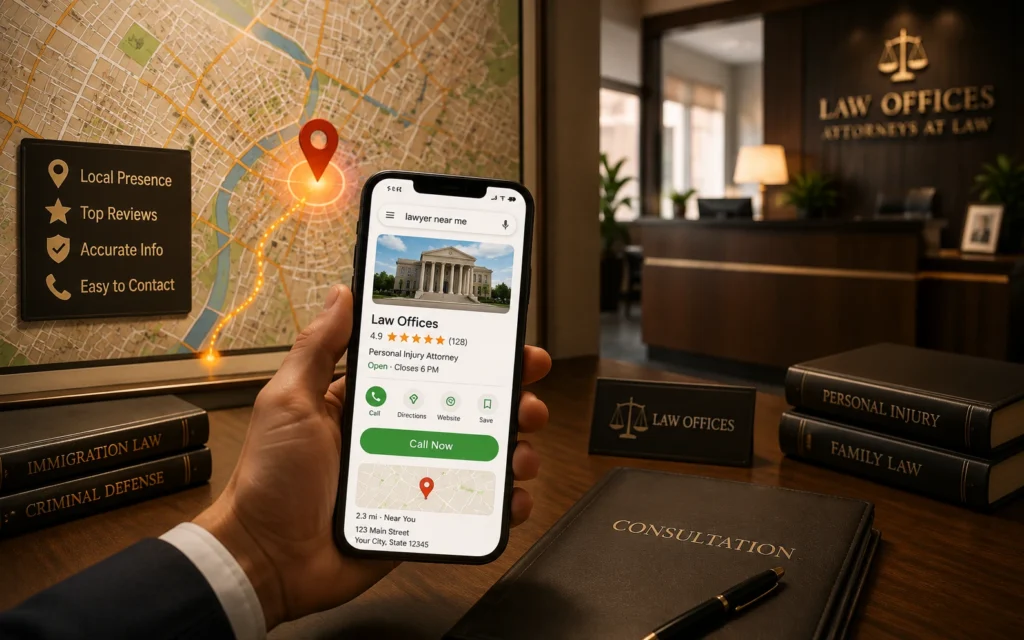
For many lawyers, local visibility is where most of the competition happens. Clients usually search by city, nearby area, or “near me” rather than nationwide, which is why local SEO for lawyers deserves serious attention.
Google says local rankings are mainly based on relevance, distance, and prominence in its Business Profile local ranking guide. A weak or incomplete profile can make a good firm look invisible in local search.
For a law firm, I would check the firm name, address, phone, and hours for accuracy, the primary business category and listed services, service areas, reviews and how the firm responds to them, photos of the office or team, and whether all of these details match the website.
Reviews matter too, although authenticity matters more. A handful of detailed client reviews looks stronger than a suspicious pattern of forced ones.
Your Website Has to Turn Trust Into Action
A law firm website should not make people hunt for the phone number. I still see legal sites where the contact form is buried, the phone number disappears on mobile, or the page ends with no clear next step. That hurts enquiries even when rankings improve.
Law firm website SEO connects with design at this stage.
| Website element | Why it matters |
| Clear practice area headline | Shows the visitor they are in the right place |
| Attorney bio link | Builds trust before contact |
| Review section | Reduces hesitation |
| Simple consultation CTA | Makes the next step obvious |
| Mobile click-to-call button | Helps urgent visitors act fast |
If the site is slow, confusing, or poorly structured, SEO work becomes much harder. Our WordPress development work often connects with SEO because good content still needs a clean website behind it.
Legal Content Should Support the Main Pages
Legal content should focus on genuine client questions instead of empty filler. A blog can explain steps, documents, timelines, and common concerns, although it should never promise outcomes or sound like legal advice for every reader’s specific case.
Good topics usually come from common client questions, like what to do after being served divorce papers, how soon a lawyer should be contacted after an accident, what documents to bring to a consultation, or when a small business needs a contract lawyer.
These posts support attorney SEO when they link naturally to the right practice area page. Without that connection, blog traffic can come and go without producing enquiries.
For firms that need a proper content system, our content writing service helps when the goal is strategy over producing more words for the sake of it.
What I Would Fix First
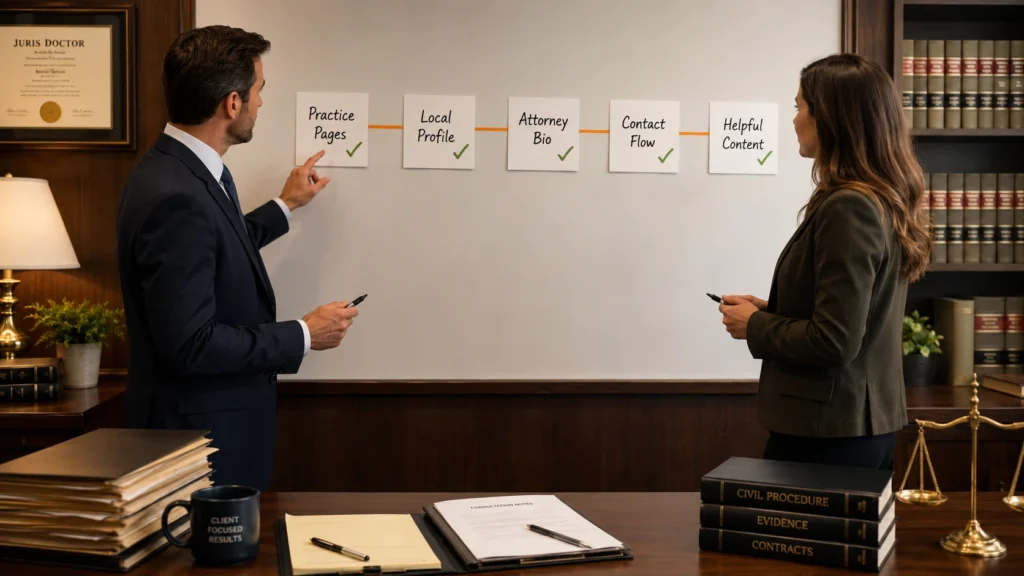
I would not start with thirty blog posts on a new law firm website. The pages closest to enquiries come first, in this order:
- Main practice area pages
- Google Business Profile
- Attorney bio pages
- Contact and consultation flow
- Local trust signals
- Helpful blog topics that support service pages
This keeps the SEO plan focused. The firm builds a path from search to trust to enquiry instead of chasing scattered traffic.
The Right Tone for Lawyer SEO
Strong SEO for law firms should make the firm easier to find, understand, and trust. It should never turn every page into aggressive sales copy. Legal clients make serious decisions, so they need clarity, proof, and a simple next step before they reach out.
That is what good SEO supports for law firms. The goal is better legal enquiries from the right clients, instead of random traffic that never converts. If you want help reviewing where your law firm site sits today, our start project page is the easiest place to begin.
FAQs
How long does SEO take for lawyers?
It depends on the city, competition, website condition, and practice area. In most cases, law firms should think in months rather than days.
Do lawyers need blog content?
Yes, although blogs should support practice area pages. Random legal articles without internal links or clear intent usually do not bring strong enquiries.
Is local SEO important for lawyers?
Yes. Most legal clients search by location, especially for family law, criminal defense, personal injury, immigration, and estate planning matters.
