
A few weeks ago, Home Depot launched a World Cup campaign called “We All Have a Name.” It pairs USMNT striker Ricardo Pepi with people working in their stores. Same color jersey, same pride behind the work. They booked outdoor watch parties across host cities, from Atlanta to Toronto to Monterrey. None of it actually sells a hammer. None of it has to.
That’s what a good world cup marketing strategy looks like at the top of the budget tree. Brands have stopped advertising at the World Cup. They’ve started showing up inside it. Small businesses watch this and assume they’re missing the bus because they don’t have a sponsorship budget. They aren’t. They’re just playing a different game.
Here’s how the 2026 tournament is reshaping major campaigns, and what a small business can actually steal from those plays without writing a seven-figure check.
How Major Brands Are Approaching World Cup 2026
The 2026 tournament is the first hosted by three countries together. Sixteen host cities, 104 matches, 48 teams across the US, Canada, and Mexico. According to Marketing Dive’s coverage of brand activity around the tournament, several major marketers are calling it the largest soccer investment they’ve ever made. Industry estimates put global ad spend tied to the event at over $10 billion.
The interesting part is how the strategies shifted. Old World Cup ads were product-led: a Coca-Cola bottle, a Nike boot, a star athlete in a TV spot. The 2026 cycle looks different. Most major brands are running culturally-aware narratives instead.
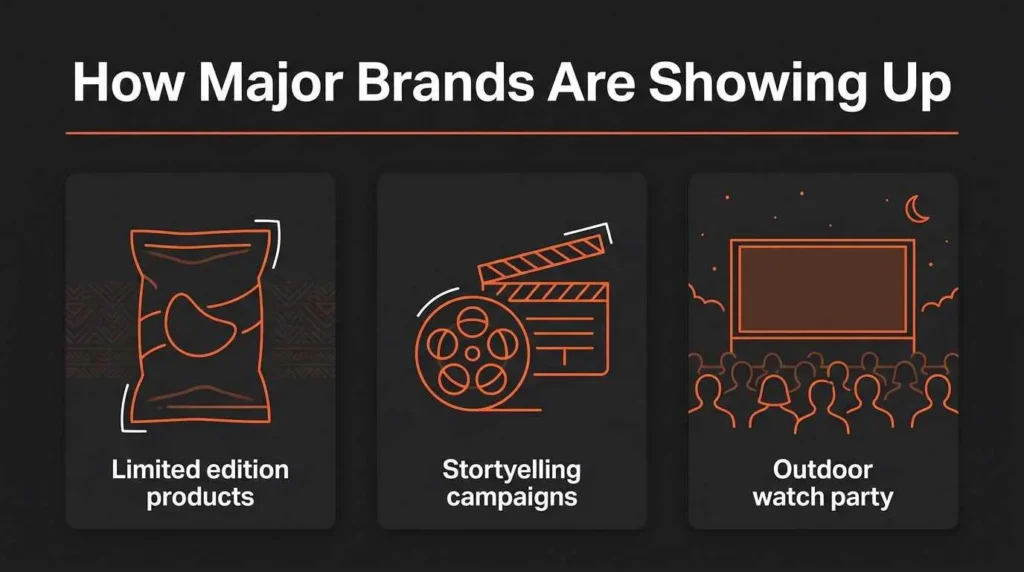
Lay’s launched three limited edition flavors tied to past host countries: France, Brazil, Argentina. Same shelf space, same product line, just a cultural hook. Per a Fast Company interview with their CMO, Lay’s chose this fragmented approach because one global message couldn’t work across 200 markets. Different fans needed different invitations.
Adidas took a different angle with their film “Backyard Legends,” starring Messi, Bad Bunny, Lamine Yamal, Jude Bellingham, and Trinity Rodman. Notable because the story leaned on nostalgia and grassroots football, not the shoe itself. The product showed up, but the story wasn’t about the product.
Dove Men+Care chose the experiential route, running limited product drops, influencer activations, and pop-up “Ritual House” experiences in NYC, Miami, and Kansas City.
The pattern across all of them is the same. Brands stopped advertising at the World Cup. They started showing up inside fan culture. And almost none of them led with the product.
What Small Businesses Can Actually Steal From These Campaigns
The lessons aren’t budget-dependent. The mechanics are.
Lay’s didn’t spend money on the limited edition flavors because they’re geniuses. They spent it because they understood three things about World Cup behavior. Fans go nostalgic about past tournaments. Anything that feels limited-time hits harder. And cultural specificity wins over generic positioning every time. A small business with a $500 budget can hit all three of those without printing new packaging.
Take a local restaurant. Adding a “World Cup viewing menu” with three dishes inspired by past host countries achieves the same nostalgia trigger. Cost: a chalkboard sign and slight kitchen tweaks. Effect: the same cultural relevance Lay’s bought with multi-million dollar packaging runs.
A local bar, salon, or coffee shop hosting their own watch party with branded specials gets the same community gathering effect at one percent of the cost. Becoming a gathering point is what carries the play. The budget doesn’t matter much to the mechanic itself.
The table below shows what each major brand play looks like alongside the small business version that costs almost nothing to execute.
| Big Brand Play | The Mechanic | Small Business Version |
| Lay’s limited edition flavors tied to past host countries | Cultural nostalgia + scarcity | A “World Cup viewing menu” with three dishes from past host nations |
| Home Depot outdoor watch parties across host cities | Becoming a community gathering point | One branded watch party at your shop with a themed special |
| Adidas “Backyard Legends” film | Storytelling beats product features | Short Reels or TikToks of staff and customers in jerseys, no product push |
| Dove Men+Care “Ritual House” pop-ups | Experiential, location-based activation | A photo backdrop or jersey wall inside your store for fans to share |
The shared thread across both columns is simple. You don’t have to be at the World Cup to participate in it. The goal is being the place customers think of when the games are on.
Most small business marketing budgets miss the opportunity entirely. They go into generic boosted posts that say “go [team].” Coupons with no World Cup tie-in. Google Ads bidding on terms way outside the brand’s actual relevance. None of it converts because none of it earns a place in the fan’s experience.
A working digital marketing strategist view of this moment treats it as a 38-day attention window. The real win is earning your way into the fan’s matchday plans. Loud advertising on its own doesn’t do that.
Building a World Cup Marketing Strategy on a Small Budget
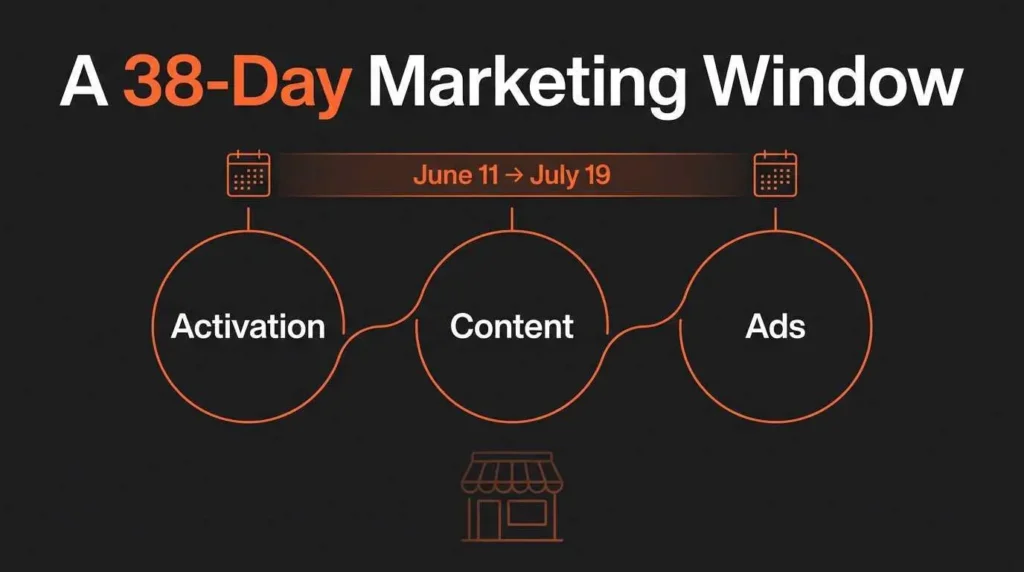
The first principle is that any World Cup marketing spend should map to the 38 days the tournament actually runs. June 11 through July 19. Spending the same amount on July 25 makes no sense because the attention window closes the day after the final.
A realistic small business budget for the tournament window splits roughly across three buckets.
One tangible activation comes first. A watch party, a themed menu, a jersey photo wall, a sidewalk sign. Something physical or experiential that gives customers a reason to walk in or post about your spot. Most small businesses can pull this off for under $300.
Then short-form social content. Three to five Reels or TikToks shot quickly on a phone, tied to specific match moments rather than generic “go team” posts. Cost is mostly time. The return is local discovery during a period when people are watching match clips for hours each day.
Paid amplification is the third piece, and most owners get it wrong here. Broad boosted posts don’t work in event windows. Targeted ad marketing on Meta or Google focused on a local radius around your business, with creative tied to your actual activation, can hit a CPM that’s hard to match outside the tournament. A few hundred dollars of well-targeted spend across the 38 days beats $1,000 of generic boosted content.
A good world cup marketing strategy at a small business level is mostly about discipline. One physical thing. A few content pieces. Modest paid spend tied to the activation. Repeated through the tournament window.
If you want help building this out for your business before the next round of matches kicks off, start a project with us and we’ll map a 38-day plan for your shop, your audience, and your budget.
Quick Questions Before You Launch
Is it too late to start a World Cup marketing campaign?
No. The tournament runs through July 19. There’s still time to launch a single activation, a few short content pieces, and a small targeted ad budget around the remaining match days. Late is better than skipping the window entirely.
Can small businesses use FIFA World Cup logos or branding?
No. FIFA trademarks, the World Cup name, official emblems, and team logos are all protected. Using them in your marketing without official rights is a legal risk. Stick to generic terms like “tournament,” “matchday,” “watch party,” and “fan zone” instead.
What kind of social media content actually works during the World Cup?
Short Reels and TikToks tied to specific match moments outperform scheduled “go [team]” posts. Behind-the-scenes clips from your activation usually beat polished branded content. Speed matters more than polish during live event windows.
