
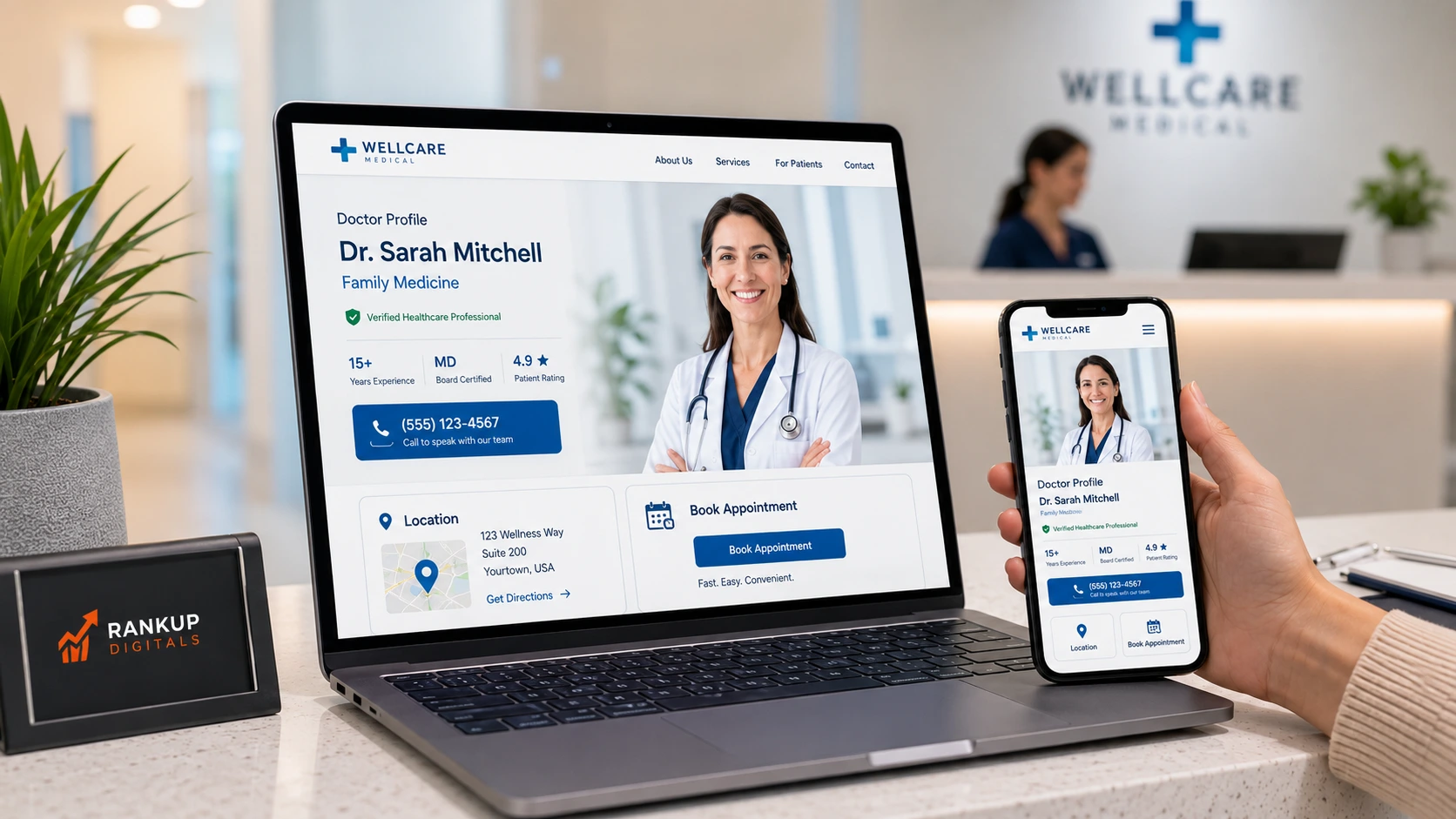
Picture a patient comparing three clinic websites at night. The first buries its phone number in the footer. The second wants an insurance card before it shows a single time slot. The third shows a real dentist’s face, a tappable number and open slots for tomorrow, and that is the clinic she books.
Patients rarely judge design for its own sake. They check whether you are qualified, reachable and bookable in about ninety seconds. Healthcare website design succeeds or fails on that check.
What patients check before they book
Visitors arrive anxious, sometimes in pain, and often compare several providers in one session. Before they book, they want to know whether they can trust the provider, reach them, and book without calling during office hours. The table shows how that plays out by practice type.
| Practice | Trust signals patients look for | Booking pattern |
|---|---|---|
| GP / family doctor | Board certifications, hospital affiliation, languages spoken | Online slot picker with an insurance step |
| Dentist | Procedure photos, transparent pricing, before and after work | Service-first booking (cleaning, implant or cosmetic) |
| Therapist | Privacy emphasis, session format, niche specialization | Confidential intake form, simple calendar |
| Multi-provider clinic | Provider directory, hours per location, walk-in information | Provider-specific or service-specific |
A dentist who hides pricing loses bookings, and so does a therapist whose privacy language is weak. The cause is the same: friction in front of the booking decision. If you are comparing builds, our website design packages page explains what a good package should include.
Trust signals that move bookings
Use real photos of your team, your rooms and your front door. Stock images of a doctor with a perfect smile are easy to spot, and they make a practice look anonymous.
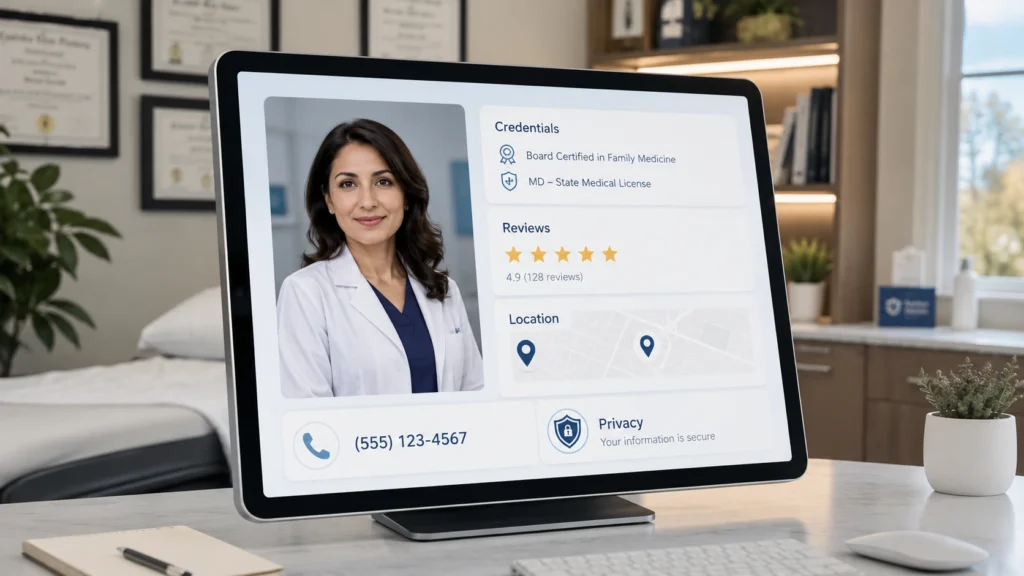
- Names, faces and credentials spelled out for each provider
- Google reviews embedded live, not screenshot quotes
- Contact details visible from every page
- A working Google Maps embed instead of a static screenshot
- A privacy policy a patient could understand in two minutes
Generic small-business templates give you one About page, one Services page and one Contact page. A healthcare site needs more: provider bios, service pages, patient resources and a reviews section. Our guide to business website design covers the wider rules for sites meant to bring in calls and bookings.
Booking: keep it under ninety seconds
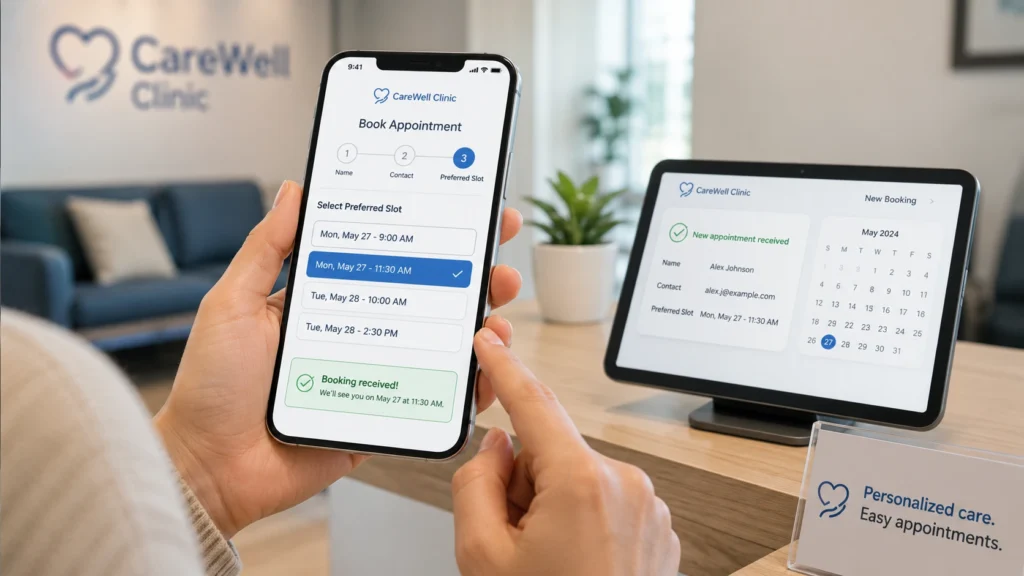
Patient appointment booking is the biggest conversion lever on a healthcare site. A small practice with a simple booking flow can serve patients better than a larger competitor with a prettier site and a clumsy form.
The most common mistake is a form with eight fields, a few drop-downs and a “how did you hear about us” question before the patient can choose a slot. Every extra field gives someone a reason to quit. Ask for name, contact details and a preferred slot, then collect insurance, medical intake and reason for visit once the slot is held.
Design is only half of it. If submissions land in an inbox someone checks once a day, patients wait, and some book elsewhere. The form should write to the practice calendar or send an instant confirmation.
Booking also connects to your ads. If you send paid traffic to a clinic page, read our notes on doctor Google Ads campaigns and on landing page optimization before spending more.
Mobile speed and local search
Many healthcare searches happen on a phone, so the mobile version is the main version. Check these:
- Pages load quickly on a mobile connection
- The phone number is a tappable tel: link on every page
- The booking form works without pinch-zooming
- The map opens in the native maps app
For speed, look at Core Web Vitals: LCP, INP and CLS. If pages feel slow, our guide on how to speed up WordPress lists the usual causes, and regular WordPress maintenance services keep updates from dragging a site down again.
A clinic chasing a search like “dentist Marina Dubai” needs a complete Google Business Profile, contact details that match across directories, and pages that mention the real service area. Our SEO services for clinics usually cover profile optimization, citation cleanup, schema markup and content built around the procedures the practice handles. For the wider picture, see local digital marketing.

Service pages with real substance
Many medical sites list every procedure in two-line bullets on one Services page. It looks tidy, but it gives a patient, and a search engine, very little to work with.
Give each major service its own page: what the procedure involves, who is a good candidate, what recovery looks like, pricing where it makes sense to publish it, and the questions patients ask. A few deep pages help more than many thin ones.
That depth needs clinical input from your providers. A team offering SEO content writing can shape the pages, but the facts should come from your doctors.
Sites with many service pages, bios and booking tools usually do better on custom WordPress development than on a template set up by a generalist, which often carries boilerplate text and missing schema. If your live site is underperforming, website redesign services may be the better starting point.
Privacy, accessibility and content quality
Google’s quality rater guidelines describe medical topics as YMYL, short for Your Money or Your Life. On a clinic site, that means accuracy, authorship and trust deserve extra care.
Any form that collects patient details needs a privacy policy explaining what is stored, where and for how long. Practice size does not decide whether HIPAA applies. It applies to covered entities, such as providers who bill electronically, and state privacy laws can apply too. The HIPAA overview from the Department of Health and Human Services is the official starting point. Write the policy in plain language, and have a qualified advisor check which rules cover your practice.
The WCAG guidelines cover color contrast, screen reader support, keyboard navigation and text alternatives for images. Following them makes the site easier for every patient to use.
Google’s helpful content guidance favors content written to help people, with clear authorship and real expertise. Articles published under your providers’ names serve readers better than generic posts.
Where to start
Most of the work comes down to removing friction: real photos, contact details on every page, booking that takes ninety seconds, a phone-friendly site and service pages with substance.
If your site is missing more than two of these, ask for a free consultation and we will look at where patients drop off. You can also read about common SEO mistakes that hold business sites back.
Frequently asked questions
What makes healthcare website design different from regular business sites?
The stakes are higher. Patients are weighing a medical decision, which is heavier than choosing a vendor. Clear trust signals count for more than visual flair, and Google’s quality rater guidelines describe medical topics as YMYL, where accuracy and trust matter most.
How much does mobile matter for clinic websites?
Quite a bit, because many healthcare searches happen on phones. If your site is slow or painful to book on a small screen, those patients will choose another clinic.
Can a small clinic skip privacy compliance?
Size does not decide it. HIPAA applies to covered entities, such as providers who bill electronically, and state privacy laws can apply too. Have a qualified advisor check which rules cover your practice, and write a policy that describes your own practice, not a generic template.
Should every service have its own page?
Every major service should. A dedicated page lets you explain the procedure, who it suits, recovery and pricing where appropriate. That helps patients more than a single list of procedures.
How long should an online booking form be?
As short as you can make it. Name, contact details and a preferred time slot are enough to hold an appointment. Ask for insurance and medical details afterward.
