

Picture a small business owner opening an email at 9 p.m. The subject line promises “Guaranteed page 1 in 60 days.” The price is $200 a month, and the owner is tired of waiting for the phone to ring. It feels like a bargain. Three months later there are monthly PDFs full of charts and not one new lead.
That scene is common because the market for small business SEO services is crowded with agencies chasing small budgets, and quality varies a lot. This guide covers which work moves rankings, what each budget level buys, and how to check an agency before you sign. No one can guarantee a Google ranking, so your best protection is knowing what good work looks like.

What moves rankings for small businesses
Most proposals list 15 deliverables. Maybe five matter: local SEO, on-page work, technical health, content and backlinks. Everything else either supports those five or pads the invoice.
Local SEO comes first for most
For businesses that depend on nearby customers, local search usually produces results before anything else does. Visibility has to connect with local digital marketing so rankings turn into phone calls, forms and booked jobs.
Say a plumber isn’t showing up for anything. The Google Business Profile is half filled in, there are three reviews and no citations. Completing the profile, building directory citations and setting up a simple review routine is the usual first fix.
Give every service its own page
Now say a dentist lists seven treatments on one “Services” page. That is seven topics on one URL, so search engines have little to match any single search against. One page per service, each with its own title tag, meta description and schema markup, gives every treatment a fair chance to rank. It also reads better for a visitor who wants one specific treatment.
Technical SEO sits underneath
Site speed, mobile usability, crawl errors and Core Web Vitals affect everything that comes after. Google measures Core Web Vitals as LCP, INP and CLS.
This is what we check first in our SEO services audits. A focused technical SEO audit finds the problems, and a guide on how to speed up WordPress covers the usual causes of a slow site.
Technical work should be fixed once, properly. If someone charges monthly “technical fees” past month 3 without explaining what they’re fixing, you have your answer.
Content and backlinks are the long game
Content that targets real search queries, plus links from legitimate publications, builds authority over time. Google’s own helpful content guidance makes the quality bar clear: write for people first. Good SEO content writing answers a real question better than the next page does.
What each budget level gets you
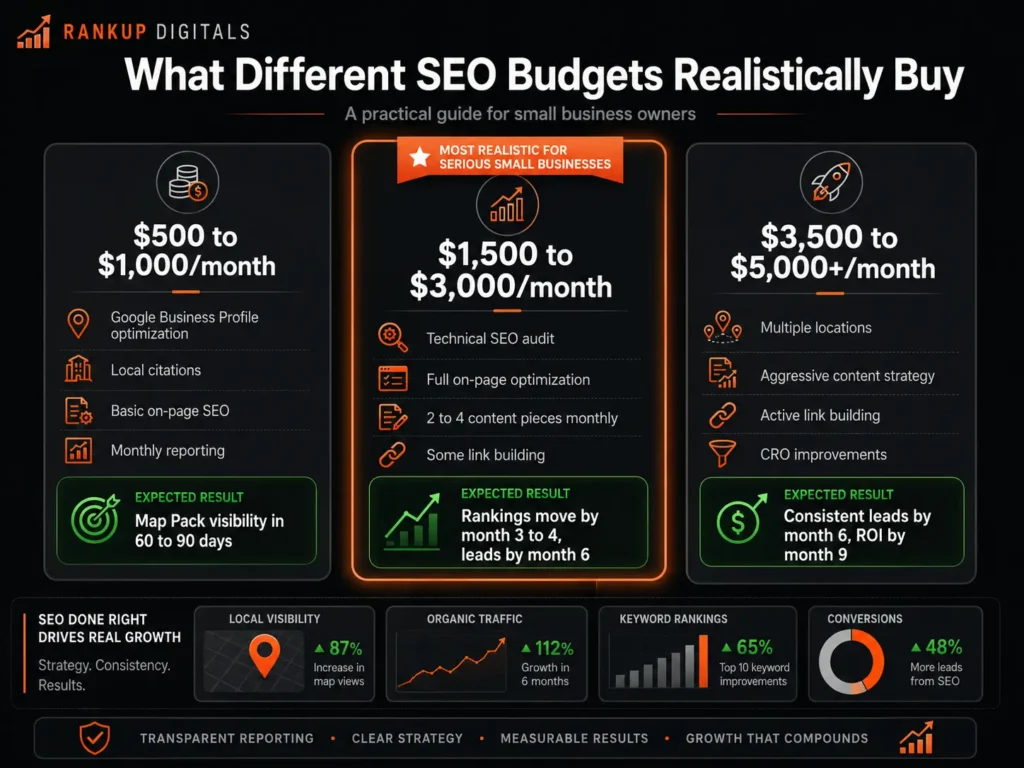
Budgets decide how much of that work can happen each month. This is what we typically see at each tier.
| Monthly budget | What you get | When results start |
|---|---|---|
| $500 to $1,000 | GBP optimization, citations, basic on-page, monthly reporting | Map Pack visibility in 60 to 90 days (low-competition markets) |
| $1,500 to $3,000 | Technical audit, full on-page, GBP, 2 to 4 content pieces monthly, some link building | Rankings moving by month 3 to 4, real leads by month 6 |
| $3,500 to $5,000+ | Multiple locations, aggressive content, active link building, CRO | Consistent leads by month 6, clear ROI by month 9 |
Most serious small businesses land in the middle tier. That usually means a dedicated account manager, a real strategy and deliverables you can see each month.
Below $500 there is a floor. A single quality blog post costs $150 to $500 to produce. Affordable options exist, but at the very bottom you are paying for automated reports and outsourced work nobody checks.
How long SEO takes to pay off
SEO doesn’t work like ads. When you stop paying for ads, the traffic stops that day. SEO builds slowly, so month 3 often feels quiet. By month 6, content starts ranking and traffic picks up. Month 9 is usually where it starts paying for itself.
These timelines are typical, not promised. They depend on your market, your competitors and how much of the work gets done. That is why the next step matters: choosing who does it.
How to tell if an agency will deliver
A common pattern: the owner pays for 6 to 12 months and gets monthly PDFs full of charts, with no leads to show for it. A few checks before signing can prevent that.
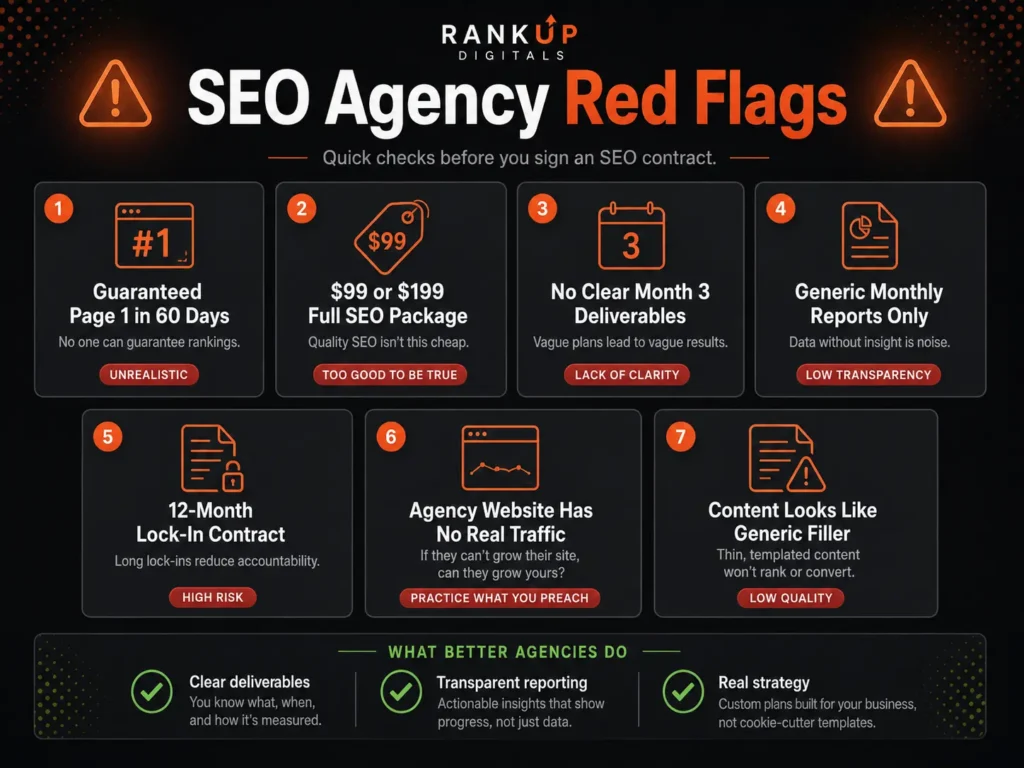
Run the agency’s own website through Ahrefs or SEMrush. An agency that sells SEO but can’t get its own site to rank has given you a good reason to think twice before handing over yours. Read the blog too. If it reads like generic filler, that is the content quality your business will get.
Look at the design as well. Weak copy, confusing service pages and poor business website design usually show up before the sales call does.
Then ask one question in the sales call: “What specific deliverables will I get in month 3?” If the answer is “ongoing optimization” with no details, walk away. A good partner lays out the first 90 days before you sign: what gets audited, what content gets planned and when real reporting starts.
| Warning sign | Why it matters | What a better answer sounds like |
|---|---|---|
| “Guaranteed page 1” | No one controls Google’s results | A plan, a timeline range and honest caveats |
| $99 or $199 per month for everything | That usually buys less than two professional hours | A scope that matches the price |
| 12-month lock-in with a new agency | They may need the contract because results won’t keep you | Month-to-month, or three months at most |
One more sign is worth watching. When an agency asks about your customer value and most profitable services before talking keywords, it is building strategy around revenue instead of vanity metrics. That mindset is what a good digital marketing strategist brings. Also read our list of common SEO mistakes so you can spot them in a proposal.
Before you sign with anyone
Treat SEO as a 12-month investment rather than a 30-day experiment. Find the right partner, give them runway, track leads instead of rankings and let compounding work. Google’s SEO starter guide is a free way to learn the basics, so you can judge proposals with confidence.
Talk to at least three agencies and compare proposals side by side. The differences in specificity will tell you most of what you need to know.
If you want a second opinion on a proposal you already have, book a free marketing consultation with Rankup Digitals. You can also contact our agency directly with questions.
Frequently asked questions
How long before SEO generates leads?
Expect ranking movement by month 3 to 4, real leads by month 6 and clear ROI around month 9. Local SEO in low-competition markets can reach the Map Pack in 60 to 90 days. Competition and starting point change these numbers.
Should I hire an agency or a freelance consultant?
A small business SEO consultant works well for one-time audits and strategy roadmaps. For ongoing execution, such as content, link building and technical work, a team usually handles it more consistently.
What is the single most important thing to do first?
Claim and fully optimize your Google Business Profile. It is free, it takes an afternoon, and for local businesses it tends to produce visible results faster than anything else.
Can an agency guarantee a page 1 ranking?
Google decides the results, so no honest agency can guarantee a page 1 spot. It can only commit to the work it will do. Treat any guaranteed ranking as a reason to ask harder questions.
What should I track to know SEO is working?
Track leads: calls, form fills and booked jobs from organic search. Rankings are useful as a signal, but they don’t pay your bills. Ask for a monthly report that connects the work to those leads.
