
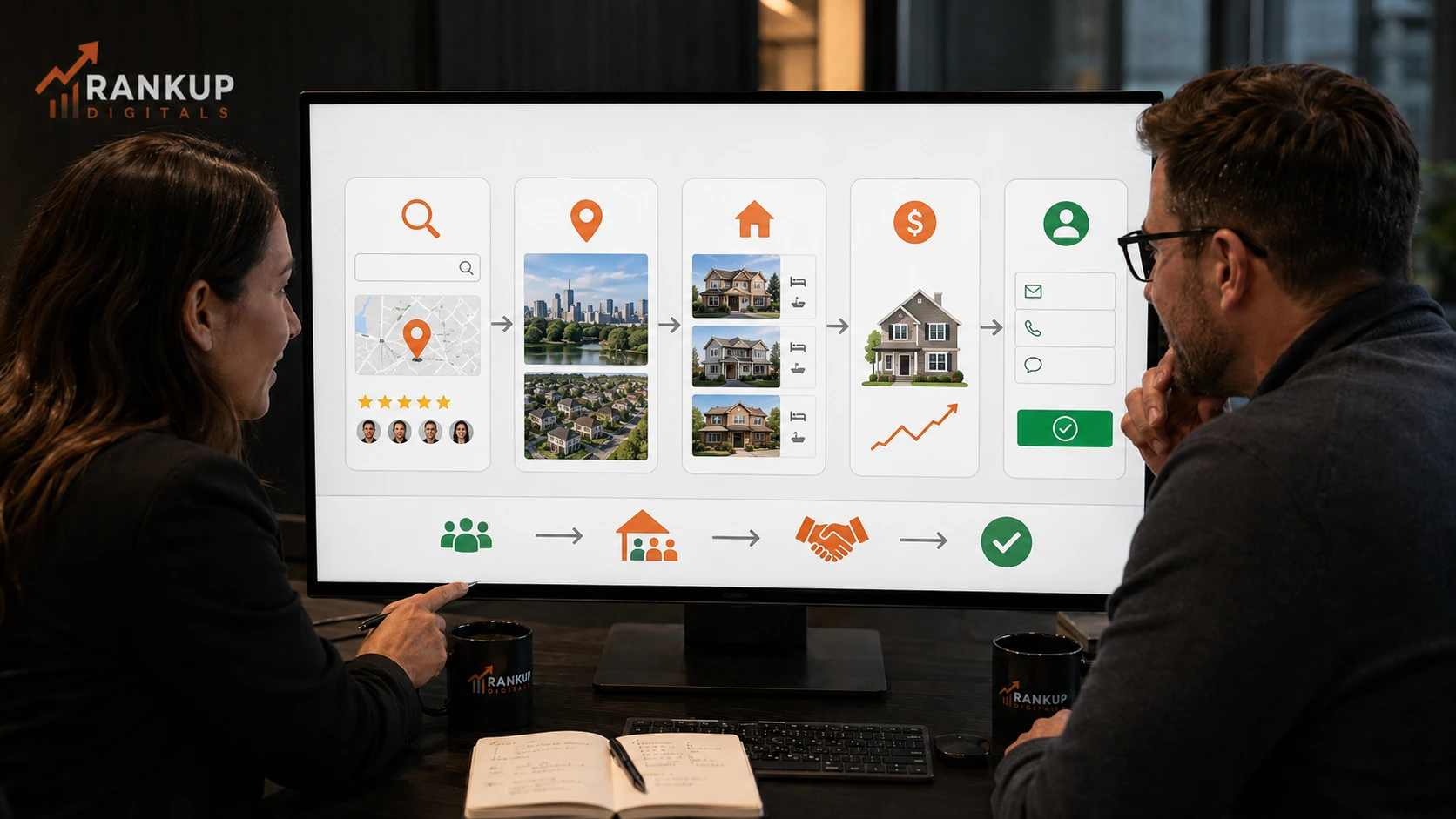
Picture a real estate agent whose website has listings, photos and a blog, but no leads. The site has contact forms and looks busy from the outside. Now imagine he looks at what his buyers and sellers type into Google: property addresses are a tiny fraction of it. Most searches are about neighborhoods, school zones, price trends, recent sales, and agent reputation, and his site gives those searches nowhere to land.
That gap is common in real estate SEO. Zillow, Realtor.com, Trulia and the other major portals already dominate most listing-style searches before a smaller agent gets a look in. Good real estate SEO works on a different problem: helping the right buyer or seller find the right agent before they commit to someone else.
Real Estate SEO Starts Before the Listing
Most agents try to rank their listings first. Listings feel like the product: someone sees a house, likes it, and calls. But the search that leads to that call usually began well before.
A buyer might Google “best neighborhoods near Austin for families” weeks before opening a single listing. A seller searches “how much is my home worth in Tampa” months before speaking to anyone. People relocating look up school districts, commute times, property taxes, and market trends first. If a site carries only listings, the agent shows up late, after the visitor has a shortlist and other agents bookmarked.
A few page types do most of the work:
- Neighborhood pages build local credibility in a way listings cannot.
- City pages support broader local search.
- Market updates win seller trust by showing the agent follows local data.
- Buyer guides help first, then invite contact.
- Home valuation pages catch seller intent the moment someone starts thinking about a move.
Each of these needs real writing behind it, which is where solid content writing services earn their keep.
How Buyers and Sellers Search Differently
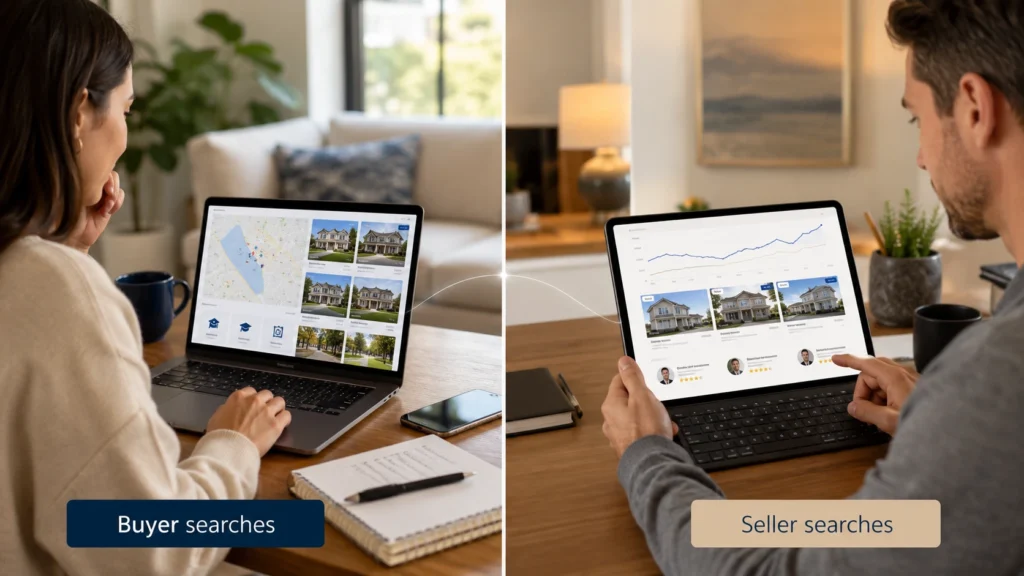
A buyer wants confidence about the area. A seller wants confidence about the agent. Those goals create different search journeys.
Buyers search for homes near good schools, commute-friendly neighborhoods, average prices, and walkable areas. Sellers want to know whether now is a good time to sell, what their home might be worth, how long homes sit on the market, and which agent in town handles their type of property.
Treating both groups the same produces flat content. A neighborhood guide speaks to buyers, a valuation page speaks to sellers, and a market update can serve both if it offers useful local context.
Local SEO Is Usually the First Fix
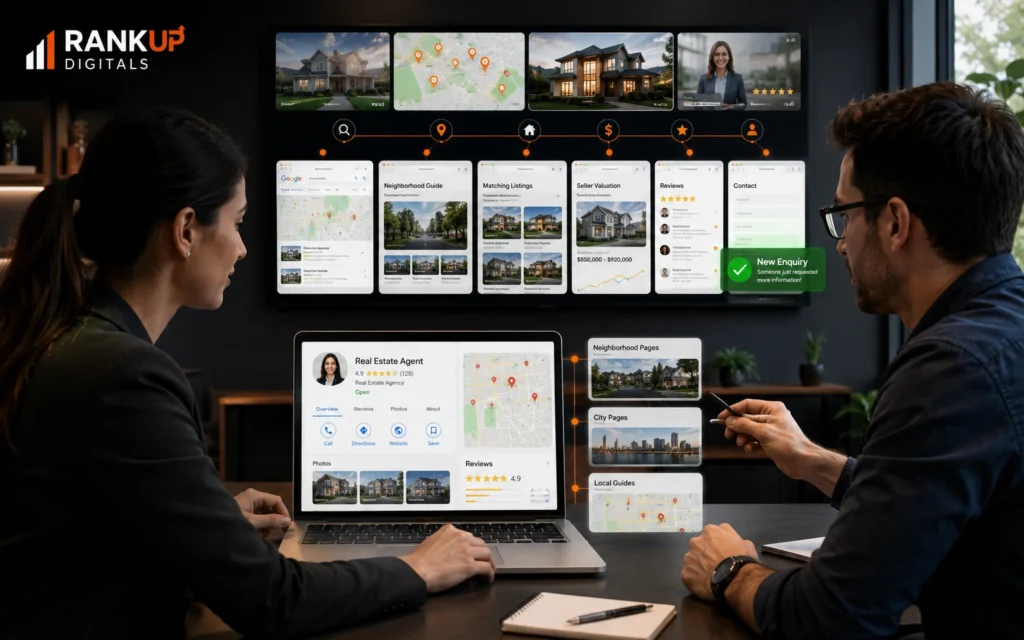
For most agents, local visibility matters more than national traffic. Google Business Profile, reviews, local citations, consistent name, address and phone details, city pages, and neighborhood pages all connect the agent with local search intent. Our guide to local digital marketing covers the wider picture.
A weak profile can cost leads before the website gets a chance. Thin reviews, outdated photos, or vague business details may stop someone from clicking at all. Google’s local ranking guidance names relevance, distance, and prominence as the main factors. Prominence leans on review depth, accurate business information across the web, and local signals from the website itself.
The website should tell the same story. If the profile lists certain cities, the site needs pages that back that up with real neighborhood detail, buyer and seller concerns, and clear next steps. Doorway pages built only for search will not hold up.
Our SEO services usually start by checking the connection between the profile, the website, service area pages, and internal links. Solo agents may also like our notes on small business SEO.
Listings and Portals: Compete Where You Can Win
Property listings matter, but a site built only around them is easy to forget. IDX integration can make a site look busy without making it useful, and if every listing page looks like the same feed everyone else has, little separates the agent from a portal.
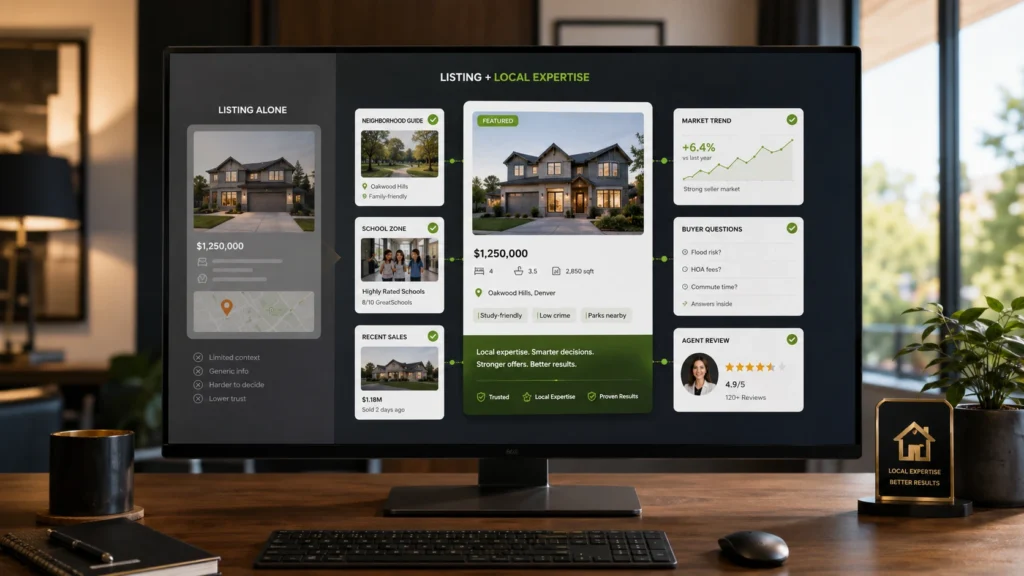
Listing pages do better with context. Say why the neighborhood is seeing more activity, what kind of buyer usually looks at this price range, whether multiple offers are common, and what a buyer should know before booking a showing.
Trying to outrank Zillow or Realtor.com for every property search is the wrong fight. Those platforms hold domain authority, listing databases, and search demand most agents cannot match. What they usually lack is deep local trust. An agent can explain the street, recent price movements, school catchment areas, and common inspection concerns, details that only come from working the market.
Google’s helpful content guidance points the same way: write for the people searching, with first-hand knowledge they cannot get everywhere else.
Where to Focus the SEO Work First
If we were reviewing a real estate website today, blog posts would be the last thing we counted. The first question is whether the site can turn local searches into buyer and seller enquiries. Many agent sites have decent photography and an IDX feed that loads fine, yet the path from search to trust to enquiry is missing.
| What to fix | Why it matters for real estate SEO |
|---|---|
| Google Business Profile | Helps agents appear for local searches and map results |
| Reviews and reputation | Gives buyers and sellers trust before they click |
| Neighborhood pages | Shows local expertise beyond basic property listings |
| Seller-focused pages | Captures valuation, selling timeline, and market intent |
| Listing page content | Adds context so listings do not feel like a copied feed |
| Internal links | Moves visitors from guides to listings, valuation pages, or contact forms |
| Website speed and mobile layout | Keeps buyers and sellers from leaving before they enquire |
Most real estate sites need a cleaner path more than they need more content. A buyer should move from a neighborhood guide to matching listings and then to a contact form. The seller path runs alongside: market update, valuation page, then a call or enquiry.
Speed deserves a mention. Core Web Vitals (LCP, INP and CLS) are one part of how Google looks at page experience, and image-heavy listing galleries can slow a page down. If that sounds familiar, start with how to speed up WordPress.
The Pages to Build First
For most agents and brokers, start with the pages closest to leads:
- The main city page.
- Neighborhood pages for the areas you sell in.
- A seller valuation page.
- Buyer guides for the areas that matter most.
- Listing pages with proper local context.
Blog posts can wait until those foundations are in place. After that they can carry market updates and buying tips.
A weak website makes SEO much harder. When clean structure, fast pages, and clear calls to action are missing, our WordPress development services can fix the site first. If the design itself is the issue, look at business website design and website redesign services.
Run a technical SEO audit if rankings have dropped or pages are not getting indexed, and read the common SEO mistakes that hurt business sites. Lawyers face a similar trust problem, and our page on SEO for lawyers shows how it plays out there.
Frequently asked questions
Is SEO worth it for real estate agents?
It is worth it when the goal is long-term buyer and seller leads. SEO works slower than paid ads, but neighborhood pages, reviews, and helpful content keep working for months after publishing.
How does SEO work for real estate agents?
It helps agents show up when buyers and sellers search for local property information, neighborhoods, home values, and agents. The website, Google Business Profile, reviews, and local pages work together as one system.
How long does real estate SEO take?
Most work needs a few months before clear movement shows up. Local fixes and Google Business Profile improvements can help sooner, while competitive organic rankings take longer because real estate results are crowded.
Can a real estate website rank above Zillow?
It happens sometimes, especially for local, specific, and trust-based searches. Beating big portals on broad listing searches is hard, but agents can compete on neighborhood guides, seller pages, and buyer questions.
Do I need blog posts for real estate SEO?
Not at the start. City pages, neighborhood pages, and a seller valuation page sit closer to enquiries, so build those before a blog. Market updates and buying tips are a useful second wave.
Fix the Local Trust Path First
Real estate SEO works best when the website feels like a local expert rather than another property feed. Buyers need context to decide, sellers need a reason to trust the agent, and Google looks for strong local signals when choosing which pages to show.
If a site has listings without neighborhood depth, no seller pages, weak reviews, and no clear path to enquiry, SEO will feel slow. To have your site reviewed, the easiest place to begin is our free marketing consultation page.
